

Costs
& Outlook
eFuels have been extensively researched – the scientific and technical expertise for a market ramp-up is available. However, the necessary political framework conditions are currently lacking to enable eFuels production on an industrial scale, such as CO2-based taxation of fuels, or the crediting of eFuels as a climate-neutral fuel in road transport. If the market conditions and production rules are right, eFuels can start to be produced in 2025 and steadily ramped-up to allow the complete replacement of conventional fuels in 2050.

With increased quantities of eFuels being added gradually to conventional fuels, and production costs falling owing to economies of scale, eFuels would be affordable for consumers in every phase of the market ramp-up. While the production costs for one litre of eFuel in 2025 with a 4% blending rate with conventional fuels are estimated to be between EUR 1.61 and EUR 1.99, by 2050 they may decrease from anywhere between EUR 0.70 to EUR 1.33 per litre of eFuel with a 100% blending rate.
This means that in 2025, diesel will cost EUR 1.22 for customers at filling station. In 2050, eDiesel will cost between EUR 1.38 and EUR 2.17 (according to current taxes and duties). In 2025, petrol with an eFuels admixture will cost between EUR 1.34 and EUR 1.36; in 2050, prices for ePetrol are expected to be between EUR 1.45 and EUR 2.24 (also according to current taxes and duties).
Climate neutrality thus remains affordable for everyone.
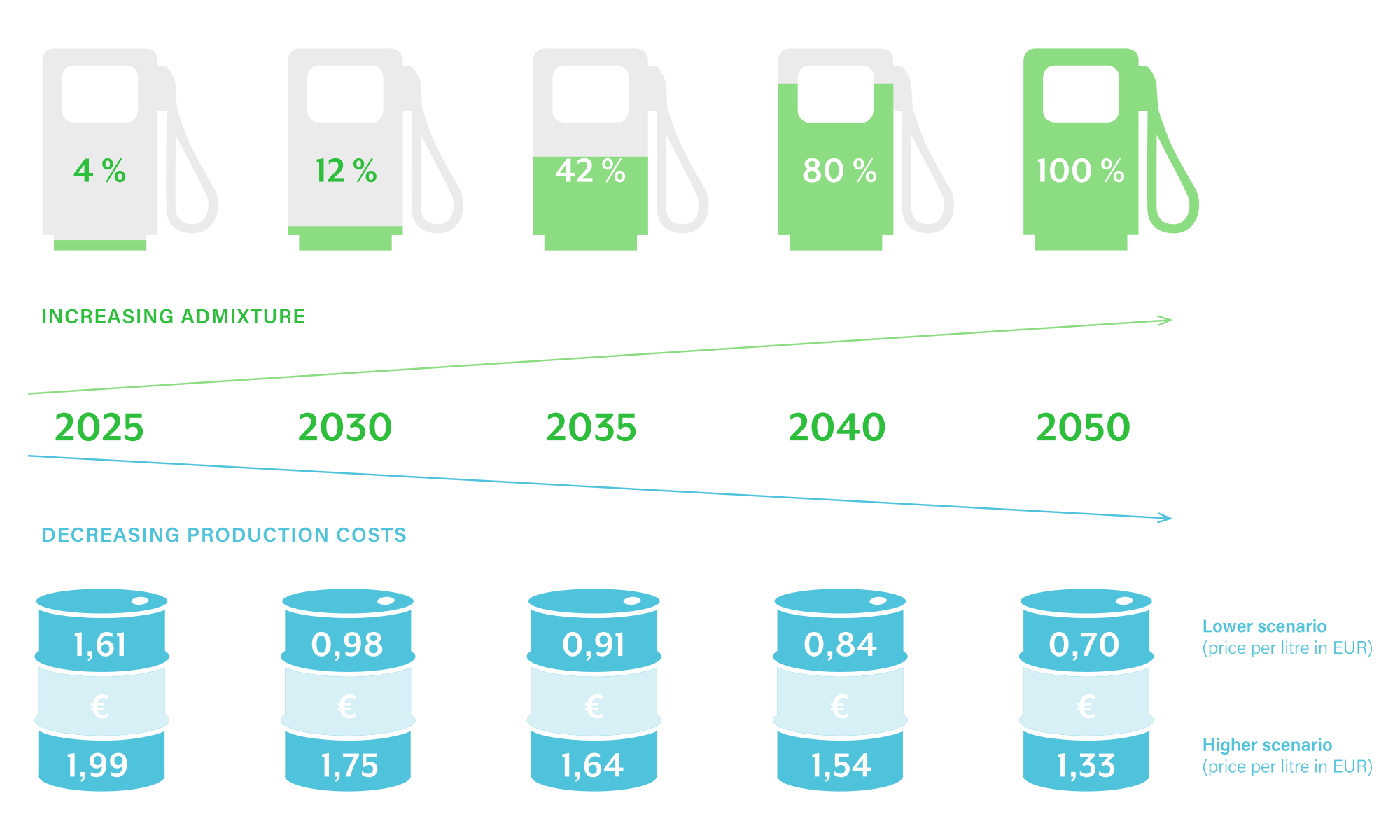
Increasing admixture of eFuels and simultaneously decreasing production costs until 2050 lead to affordable end consumer prices:

Fuel price development at the filling station: consistently affordable prices for the end user
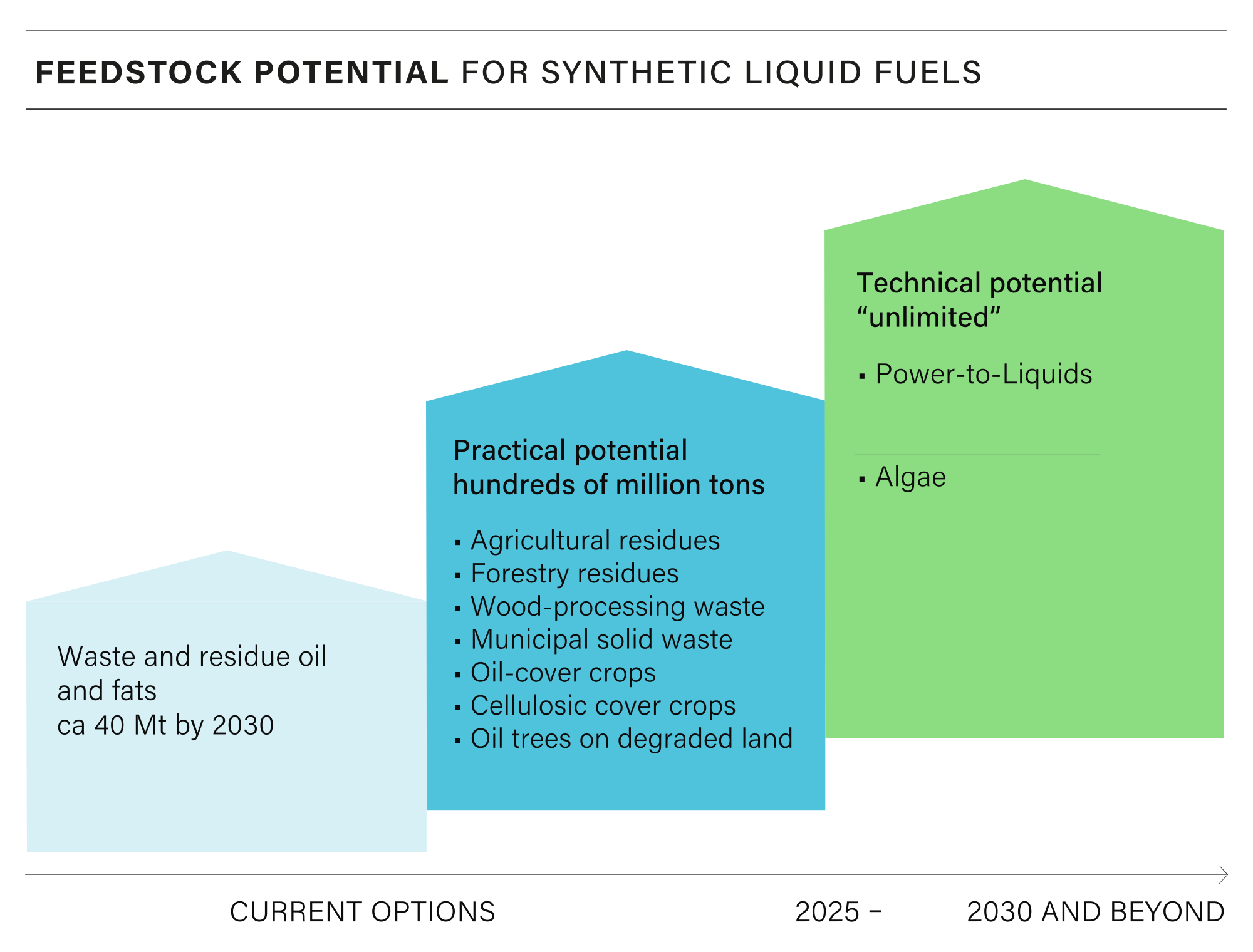
Due to the lack of a political framework, eFuel plants do not yet exist on an industrial scale. However, the technologies and components are already sufficiently known and researched. The first plants producing more than 500 million litres per year have been announced for 2026. By now, 214 GW of installed capacity of hydrogen projects have been announced worldwide. Nevertheless, to make an immediate contribution to the fight against climate change and to support the market introduction of eFuels, our political proposals include all synthetic fuels that comply with the sustainability criteria of the "Renewable Energy Directive (RED)". We need an immediate scaling of all possible sustainable energy carriers. In addition to electricity-based fuels, these include sustainable biofuels. Such sustainable biofuels come from the ever growing and innovating pool of sustainable raw materials, which are defined in the RED.